
second waba conference
24-26 November 2026
Second WABA Conference
After the hugely successful first WABA conference in Barcelona, we are delighted to invite you to take part in the
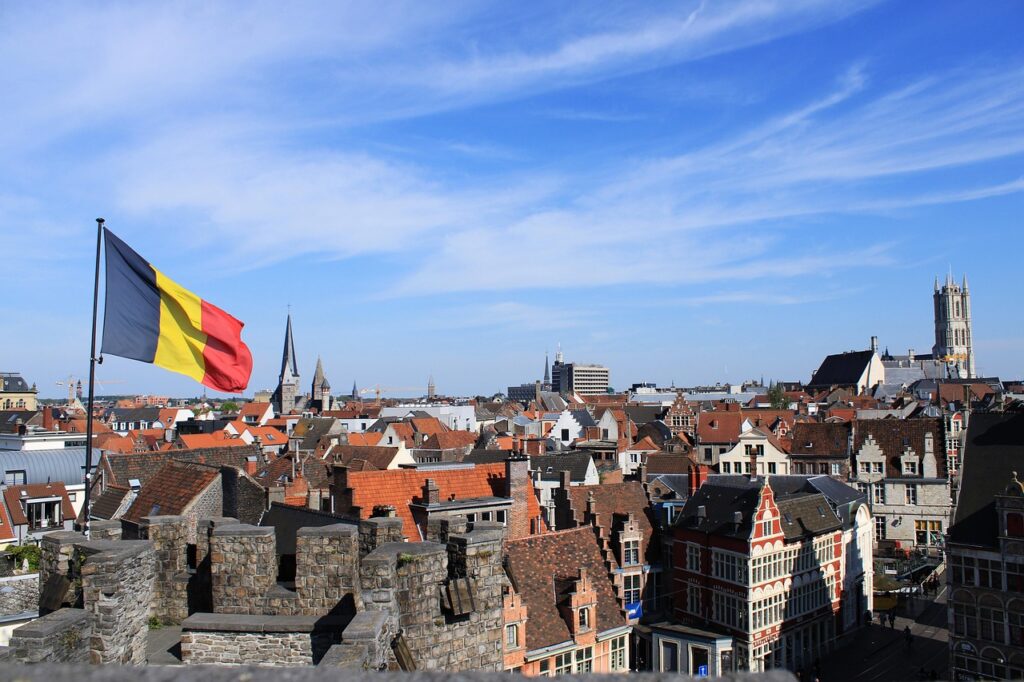
second international conference of the World Animal Biosecurity Association (WABA), taking place in Ghent,
Belgium, from 24 to 26 November 2026.
This landmark event will bring together over 250 leading experts, decision-makers, and professionals from across the globe, all united by a shared commitment to advancing biosecurity in animals.

Full Programme
Opening day – 24/11/2026
Day 1 – 25/11/2026
Day 2 – 26/11/2026
| Time | Topic | Speaker |
|---|---|---|
| 7:40 – 8:40 | Closed meeting of the Scientific and Information Committee (SIC) of the WABA | Co-chaired by Prof. Mo Salman and Prof. Claude Saegerman Note: only for the members of the SIC |
| 8:00 – 8:40 | Registration | |
| 8:40 – 9:00 | Welcome | Prof. A. Martens: Dean of the Faculty of Veterinary Medicine, Ghent University. Prof. J. Dewulf: chair of the organising committee |
| Keynote presentations – Prof. Jeroen Dewulf | ||
| 9:00 – 9:45 | Keynote 1: Biosecurity and livestock environmental impact: a win-win situation? | Prof. Ilias Kyriazakis (Queen’s University Belfast) |
| 9:45 – 10:30 | Keynote 2: Strengthening dairy farm biosecurity in LMICs: a One Health strategy for sustainable livestock production | Prof. Pankaj Dhaka (Centre for One Health, Guru Angad Dev Veterinary and Animal Sciences University (GADVASU)) |
| 10:30 – 11:00 | Coffee break with posters | |
| Session 1: Biosecurity for Outbreak Preparedness and Risk Management – Prof. Ilias Chantziaras | ||
| 11:00 – 11:15 | Operational Procedure for Residual Risk Assessment in ASF-Outbreak Pig Farms in Italy | Clara Montagnin (Istituto Zooprofilattico Sperimentale della Lombardia e dell’Emilia-Romagna, Italy) |
| 11:15 – 11:30 | Implementation of biosecurity measures according to legislation in intensive poultry production: An overview across 22 EU and non-EU countries | Qamer Mahmood (University of Copenhagen, Denmark) |
| 11:30 – 11:45 | African Swine Fever in South Africa: Biosecurity Challenges in Commercial and Smallholder Pig Production | Juanita van Emmenes (Agricultural Research Council – Onderstepoort Veterinary Research, South Africa) |
| 11:45 – 12:00 | Evidence of long- range airborne transport of the avian influenza virus | José Luis Pérez-Díaz (University of Alcalá, Spain) |
| 12:00 – 12:15 | From market practices to biosecurity intervention: developing and evaluating a partial lid on defeathering machines to reduce airborne contamination in Cambodian live bird markets | Frida E. Sparaciari (Institut Pasteur du Cambodge, Cambodia) |
| 12:15 – 12:30 | Advancing Everyday and Enhanced Biosecurity in the United States Dairy Industry | Miquela Hanselman (National Milk Producers Federation, US) |
| 12:30 – 13:30 | Lunch | |
| Session 2: Biosecurity Improvement: Assessment, Training and Behaviour Change – Prof. Mo Salman | ||
| 13:30 – 13:45 | From guidelines to ownership: lessons learned from co-creating biosecurity solutions across wildlife and livestock value chains | Damian Tago Pacheco (FAO) |
| 13:45 – 14:00 | Using association rule learning algorithms to target recommendations more likely to be implemented by dairy farmers | Faustin Farison (University of Montreal, Canada) |
| 14:00 – 14:15 | Farm Biosecurity and Disease Preparedness Among Swine Producers in the United States Territory of Puerto Rico | Jessica P. Mateus (Ohio State University, US) |
| 14:15 – 14:30 | Not just structure, it’s skills: manager training is associated with better biosecurity in live animal markets across the South Caucasus and Moldova | Sarah Oste (Ghent University, Belgium) |
| 14:30 – 14:45 | Resilience of Belgian Cattle Farmers Towards Infectious Diseases Outbreaks | Véronique Renault (Regional Association for Animal Health and Identification, Belgium) |
| 14:45 – 15:00 | Facilitation of local community engagement in Tanzania between farmers, students and the Livestock Agency to enhance biosecurity and welfare on smallholder poultry farms | Vanessa Vichi (Voices for Animal Welfare, Tanzania) |
| 15:00 – 15:30 | Coffee break with posters | |
| Session 3: The EU-funded BioSecure project: Achievements and Findings – Prof. Jeroen Dewulf | ||
| 15:30 – 15:45 | Tailored biosecurity coaching and visual feedback tools to improve biosecurity implementation on Dutch poultry farms | Francisca C. Velkers (Utrecht University, the Netherlands) |
| 15:45 – 16:00 | Toward evidence-based boot hygiene: cleaning effectiveness is independent of method and detergent use | Julia Gabrielle Jerab (Ghent University, Belgium) |
| 16:00 – 16:15 | Integrating biosecurity and animal welfare in European livestock systems: a multi-stakeholder approach to co-developing solutions | Lucy Markland (Teagasc, Ireland) |
| 16:15 – 16:30 | FarmR!SK in the Field: Testing Quantitative Risk Assessment for On-Farm Biosecurity Decisions | Natalia Ciria (Autonomous University of Barcelona, Spain) |
| 16:30 – 16:45 | Development of Biocheck.UgentTM scoring system to quantify biosecurity on animal transport | Laura Courtens (Ghent University, Belgium) |
| 16:45 – 17:00 | Coaching farmers: An adaptive behaviour change intervention to enhance biosecurity in dairy cattle farms | Teresa Imperial ((Autonomous University of Barcelona, Spain) |
| 19.00 | Social dinner and party | Handelsbeurs |
| Time | Topic | Speaker |
|---|---|---|
| 9:00 – 9:45 | Keynote 3: Integrated sciences to improve aquaculture biosecurity assessment | Dr. Maria Fernanda De La Cruz (Norwegian Veterinary Institute (NVI)) |
| 9:45 – 10:30 | Keynote 4: Judging and communicating the value of biosecurity programs for poultry | Dr. Bruce Stewart-Brown (DACPV, Perdue Farms) |
| 10:30 – 11:00 | Coffee break with posters | |
| Session 4: Operational Biosecurity: Hygiene, Antimicrobial Resistance and Economic Impact – Prof. Claude Saegerman | ||
| 11:00 – 11:15 | Does adding constant chlorination to a water system cleaning and disinfection programme improve water hygiene? A pilot study using ATP metry | Alex Thomsett (The George Veterinary Group, UK) |
| 11:15 – 11:30 | Interactions with Organic Soiling on Virucidal Activity Differ Between Oxidative and Non-Oxidative Disinfectants | César Núñez Zena (Schippers Europe BV, The Netherlands) |
| 11:30 – 11:45 | Strengthening biosecurity to address antimicrobial resistance in dairy farms: Evidence from a One Health Study in Punjab, India | Deepthi Vijay (Guru Angad Dev Veterinary and Animal Sciences University, India) |
| 11:45 – 12:00 | Antimicrobial use in pig herds and its association with biosecurity practices, meat inspection findings, and herd characteristics in Austria | Susanne Sawodny (University of Veterinary Medicine Vienna, Austria) |
| 12:00 – 12:15 | Biosecurity Before Outbreaks: Preventive Investment, Productivity and One Health Value Across Livestock Systems | Moïse Nkurikiyumukiza (Mount Kigali University, Rwanda) |
| 12:15 – 12:30 | Association between biosecurity level and cessation of activity in pig farms: a time-varying survival analysis | Willem Van Praet ( Animal Health Service Flanders, Belgium) |
| 12:30 – 13:30 | Lunch | |
| Flash Talks – Prof. Alberto Allepuz | ||
| 13:30 – 13:35 | Predictive Performance of Machine Learning Models for Biosecurity and Health Surveillance in Cattle Production Systems: A Systematic Review and Meta-Analysis | Deniz Ozturk (Istanbul University, Türkiye) |
| 13:35 – 13:40 | Biosecurity practices, antibiotic use and resistance in live bird markets in Cameroon | Ronald Vougat Ngom (University of Ngaoundere, Cameroon) |
| 13:40 – 13:45 | Swill feeding as a potential risk pathway for African swine fever virus in small-scale pig farms: A quantitative risk assessment in Denmark | Helene Ane Jensen (University of Copenhagen, Denmark) |
| 13:45 – 13:50 | Building the “E-BIP Framework”: a participatory road towards the Evaluation of Biosecurity Improvement Programs (E-BIP) | Marco De Nardi (University of Bologna, Italy) |
| 13:50 – 13:55 | Backyard Poultry in Australia: Safe Practice or Rising Biosecurity Challenge? | Marta Hernandez-Jover (Charles Sturt University, Australia) |
| 13:55 – 14:00 | Lessons learned from the One Health management of the 2021 avian influenza outbreak in Senegal | Mouhamadou Moustapha Sow (Gaston Berger University, Senegal) |
| 14:00 – 14:05 | Economic quantification of internal and external biosecurity failures in swine production systems using a digital simulation tool | Carlos Pineiro (Animal Data Analytics, Spain) |
| 14:05 – 14:10 | Occurrence of enteric porcine coronaviruses and their association with biosecurity levels in swine production systems in Mexico | Saúl Reveles-Félix (National Autonomous University, Mexico) |
| 14:10 – 14:40 | FAO activities related to biosecurity. Collaboration between WABA and FAO. | Damian Tago Pacheco (FAO) |
| Platinum sponsor presentations | ||
| 14:40 – 15:00 | Huvepharma | |
| 15:00 – 15:20 | CID-LINES | |
| 15:20 – 15:50 | Coffee break with posters | |
| 15:50 – 16:50 | WABA AGM | Chaired by Prof. Jean-Pierre Vaillancourt |
| 16:50 – 17:00 | Oral and poster prize | |
| 17:00 – 17:15 | Closure of the meeting | |
| 17:15 | End of conference |
Sponsorship & partnership opportunities
WABA Annual meeting offers unique sponsorship opportunities for organisations to showcase their brand and connect with industry leaders, innovators, and decision-makers. Sponsors will gain high-visibility exposure, on-site recognition, and networking sessions.
Where to stay?
The conference will take place at this address: Handelsbeurs, Kouter 29 Ghent.
Below you can find the list of suggested hotels within walking distance from the conference venue. (All delegates are responsible for their own hotel bookings).

Or check out the interactive map below to have a detailed overview of all hotel suggestions with clickable locations.

Bringing together experts to advance animal biosecurity